OmniDrive Motor
Choosing the right Custom Gear Motor manufacturer can shape an entire machine’s performance, service life, and operating cost. Global buyers often compare suppliers by price, delivery speed, and product range. Those factors matter, but they rarely tell the complete story. A reliable manufacturer should also understand load patterns, installation limits, environmental conditions, and long-term maintenance needs.
This guide examines leading manufacturers through practical purchasing criteria. These include engineering experience, torque accuracy, gear reduction options, motor efficiency, noise control, and production flexibility. It also considers sample testing, quality inspections, documentation, and after-sales communication. A small conveyor motor may require steady torque for twelve hours daily. A robotic actuator may need compact dimensions, low backlash, and precise positioning. The application changes the decision.
No supplier is perfect. That matters. A polished catalogue cannot replace verified test data or clear technical answers. Buyers should request drawings, rated-load curves, insulation details, ingress protection ratings, and applicable certifications. Factory audits, video inspections, and sample orders can reveal process strengths that websites often omit. Still, even careful evaluations may miss a supplier’s response during a production delay. That risk deserves attention.
The manufacturers discussed here serve different industries, order volumes, and customization levels. Some excel at rapid prototypes, while others support repeat production and complex assemblies. Their capabilities should be matched with the buyer’s real requirements, not marketing language alone. By combining engineering evidence with direct communication, global buyers can select a Custom Gear Motor partner with greater confidence and fewer costly surprises.
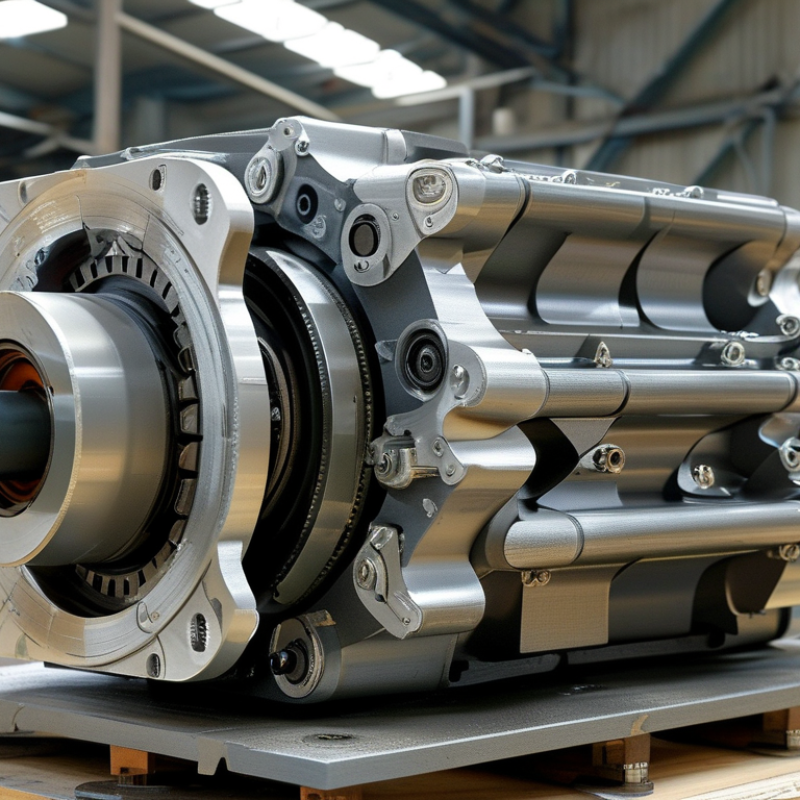
Global demand for gear motors remains closely tied to factory automation, conveyors, packaging, and material handling. Fortune Business Insights estimated the market at about USD 27.6 billion in 2023. Its 2024 report projects growth to roughly USD 40.2 billion by 2032, with a compound annual growth rate near 4.8%. Grand View Research reports a similar direction, although its market boundaries differ. These figures are useful, but not perfectly comparable.
Asia Pacific holds a major demand share, supported by machinery production and expanding logistics networks. Europe and North America show steady replacement demand, energy-efficiency projects, and warehouse automation. Buyer groups include original equipment manufacturers, system integrators, distributors, and maintenance teams. Small manufacturers often need compact AC or DC units. Large facilities may require helical, planetary, or worm gear designs with higher torque.
Tips: Compare torque at the real operating speed, not only the catalog rating. Check voltage, duty cycle, noise, sealing, brake needs, and mounting dimensions. Ask for test records and efficiency data. A lower purchase price can create higher energy costs over years. Buyers sometimes overlook ambient temperature and washdown exposure. That mistake can shorten service life. MarketsandMarkets also identifies automation and material handling as important growth areas, but forecasts remain sensitive to construction cycles and industrial investment. Human judgment still matters.
Top Custom Gear Motor Manufacturers for Global Buyers
Selecting a custom gear motor begins with the driven load, not the motor catalogue. Torque, speed, gear ratio, and duty cycle must match real operating conditions. A conveyor moving 80 kilograms may need high starting torque, even when running torque appears modest. Measure acceleration, friction, incline, and shock loads. Do not guess.
Torque is usually listed in newton-metres, while speed appears in revolutions per minute. Gear ratio reduces output speed and increases available torque, although gearbox efficiency causes losses. For example, a 30:1 ratio can produce strong low-speed movement, but it may limit responsiveness. Confirm rated torque, peak torque, backlash, and output shaft loading. A neat spreadsheet can still mislead.
Duty cycle describes how long the motor runs and rests. Continuous S1 operation creates different thermal demands than intermittent S3 cycles. Record starts per hour, operating minutes, ambient temperature, and installation position. Ask manufacturers for temperature-rise data, insulation class, testing records, and load-life evidence. We have seen motors pass a short bench test yet overheat inside a sealed machine. That experience deserves attention. Also verify voltage, frequency, protection rating, noise limits, and regional documentation before approving a production sample.
This chart compares representative engineering operating points for common gear motor types. Torque is shown in newton-metres, speed in revolutions per minute, gear ratio as output reduction, and duty cycle as the recommended percentage of operating time. Actual ratings vary by motor size, gearbox design, lubrication, thermal conditions, and application requirements.
For global buyers, a custom gear motor manufacturer should be judged by evidence, not polished claims. Ask for IEC 60034 test records covering rated output, temperature rise, insulation, and duty performance. These documents show whether the motor survives a defined operating cycle, not merely a showroom demonstration.
During supplier reviews, I look for matching serial numbers, calibrated instruments, and clear test dates. Small gaps matter. A missing load curve can delay approval.
ISO 9001 certification indicates a documented quality system, including controlled purchasing, corrective actions, and traceability. It does not prove every gear motor is reliable. Check how the factory handles rejected gears, winding defects, and design changes.
Request sample inspection reports with gear backlash, shaft runout, and noise readings. Practical audits are revealing. Walk through incoming inspection, assembly, and final testing. Clean records are useful, but honest records are better.
IP ratings describe enclosure protection under IEC 60529 conditions. An IP65 unit may resist dust and water jets, while IP67 involves temporary immersion. Confirm the installation, cable entry, seal material, and test orientation.
Efficiency also deserves careful comparison. IE3 or IE4 claims should match IEC 60034-30-1 methods, where applicable, and the motor’s voltage, frequency, and load point. A high efficiency class can lose value when the gearbox is oversized or poorly lubricated.
Request efficiency data at partial load. Manufacturers sometimes omit it. That omission needs a question, not an assumption.
Custom gear motor manufacturers serve buyers who need more than standard catalog sizes. They adjust torque, speed, voltage, shaft geometry, and mounting patterns for specific equipment. A capable engineering team can review a drawing, identify load cycles, and recommend suitable gear materials. It should also perform noise, temperature, endurance, and overload testing. Small details matter. A two-millimeter shaft change can affect the entire assembly.
These motors support industrial automation, medical devices, warehouse equipment, agricultural machines, and renewable energy systems. Each industry creates different demands. A conveyor may require steady torque for long shifts. A medical mechanism may need quiet operation and precise movement. Outdoor equipment often needs sealed housings, corrosion-resistant finishes, and stable performance across temperature changes. Some specifications remain unclear during early discussions. That assumption can fail. Experienced manufacturers ask for duty cycles, installation conditions, maintenance limits, and expected service life before confirming a design.
Global reach depends on more than shipping capacity. Reliable suppliers provide clear drawings, test records, material information, and consistent production updates. They should understand regional voltage requirements, documentation practices, packaging risks, and import procedures. Sample approval should happen before large-volume production. Communication across time zones can still create delays, especially when technical terms are translated poorly. A practical supplier reduces this risk through marked drawings, video inspections, and written change control. Not every custom project needs the most advanced motor. The better choice usually balances performance, cost, lead time, and repair access.
| Capability Area | Common Custom Options | Typical Technical Range or Configuration | Typical End-Use Industries | Global Buyer Considerations |
|---|---|---|---|---|
| Geartrain Architecture | Spur, helical, planetary, worm, bevel, and harmonic-style gear reductions | Selection depends on required torque, efficiency, noise level, backlash, package size, and duty cycle | Factory automation, robotics, medical equipment, packaging, material handling | Request torque-speed curves, efficiency data, backlash values, and service-life calculations |
| Motor Technology | Brushed DC, brushless DC, AC induction, stepper, and servo motor integration | Low-voltage DC systems commonly use 12–48 V; industrial AC systems commonly use 110–480 V, depending on the market and application | Industrial machinery, electric mobility, pumps, conveyors, agricultural equipment | Confirm voltage, frequency, controller compatibility, connector type, and regional electrical requirements |
| Reduction Ratio | Single-stage or multi-stage reduction with application-specific gearing | Common gear motor designs cover ratios from low single-digit reductions to several hundred to one; higher ratios normally require additional stages | Conveyors, lifts, feeders, valves, positioning systems, adjustable mechanisms | Balance output speed against efficiency, noise, starting torque, and physical length |
| Output Performance | Customized output shaft, hollow shaft, flange, keyed shaft, splined shaft, or D-shaft | Output torque and speed are specified from the driven load, acceleration profile, duty cycle, and safety factor | Door systems, AGVs, automated storage, office equipment, process machinery | Provide load inertia, peak torque, continuous torque, radial load, axial load, and operating hours |
| Motor Feedback | Hall sensors, incremental encoders, absolute encoders, thermistors, and resolvers | Feedback resolution and signal format are matched to the motion controller and positioning accuracy required | Robotics, CNC equipment, laboratory automation, semiconductor equipment | Verify pulses per revolution, communication protocol, connector pinout, and controller settings |
| Environmental Protection | Sealed housings, corrosion-resistant finishes, food-contact-friendly materials, and thermal protection | Common enclosure targets include IP54, IP65, and IP67; the appropriate rating depends on dust, water, washdown, and immersion exposure | Food processing, outdoor equipment, agricultural machinery, water-treatment systems | Check whether the stated IP rating applies to the complete motor assembly, cable entry, and connector system |
| Materials and Construction | Aluminum or steel housings, hardened steel gears, sintered components, engineered polymers, and stainless-steel options | Material selection is based on load, wear, temperature, corrosion exposure, noise, and target production volume | Automotive equipment, consumer devices, industrial controls, medical and laboratory systems | Ask for material specifications, heat-treatment details, lubricant type, and restricted-substance declarations |
| Thermal and Duty Design | Continuous-duty, intermittent-duty, cyclic-duty, fan-cooled, and thermally protected configurations | Duty classification should include operating time, starts per hour, load profile, ambient temperature, and allowable winding temperature | Pumps, compressors, conveyors, fans, actuators, production-line equipment | Continuous torque may be lower than short-duration peak torque; require a duty-cycle calculation before approval |
| Noise and Vibration Control | Helical gearing, precision bearings, optimized tooth profiles, balancing, damping materials, and controlled assembly tolerances | Noise performance is normally evaluated under defined speed, load, distance, and test-environment conditions | Healthcare devices, office automation, residential equipment, laboratory instruments | Compare test methods and operating conditions rather than relying on an unspecified decibel value |
| Prototype and Production Support | Engineering samples, rapid tooling, pilot production, design-for-manufacturing review, and volume production | Custom programs typically progress through requirements definition, design review, prototype validation, pilot build, and production release | New product development, automation upgrades, OEM equipment, smart appliances | Confirm minimum order quantity, tooling ownership, engineering-change control, and sample approval procedures |
| Quality and Validation | Incoming inspection, in-process checks, end-of-line testing, life testing, load testing, and traceability | Useful validation records include dimensional reports, electrical tests, torque-speed tests, endurance results, and final inspection data | Automotive, industrial automation, medical technology, aerospace-support equipment | Request a control plan, inspection standard, corrective-action process, and batch traceability structure |
| Compliance for International Markets | Technical files, declarations, safety documentation, EMC evaluation, material declarations, and market-specific labeling | Requirements vary by destination and product application; commonly referenced frameworks include IEC motor standards, EMC requirements, and RoHS-style substance restrictions | Industrial exports, consumer products, machinery, building systems, transportation equipment | Identify the legal manufacturer, importer responsibilities, applicable directives, and documentation language before shipment |
| Global Supply and Logistics | Export packaging, multilingual documentation, regional distribution, spare-parts planning, and shipment consolidation | International delivery planning depends on production location, trade terms, customs classification, shipping mode, and order volume | Global OEM programs, replacement parts, contract manufacturing, multi-site operations | Clarify Incoterms, harmonized tariff classification, packaging standards, warranty process, and after-sales support coverage |
For global buyers, comparing custom gear motor manufacturers requires more than a quoted unit price. MOQ often reveals production flexibility. A low MOQ can reduce inventory risk, but it may raise the unit cost. A high MOQ may lower pricing while tying cash to unused motors. Ask whether the MOQ applies to each specification, ratio, voltage, or combined order. Details matter. Request a written breakdown for prototypes, tooling, and repeat orders.
Lead time should be measured from approved drawings, not from the purchase order alone. Confirm sample timing, tooling duration, production days, inspection, and shipping separately. One missed bearing or shaft tolerance can delay an assembly line.
Warranty terms need equal attention. Check coverage period, operating hours, allowable load, return freight, and response time. “Replacement included” sounds reassuring, but exclusions may shift the real cost to the buyer.
Short warranty? Ask twice.
Testing records help verify claims. Ask for load, noise, temperature-rise, endurance, and dimensional inspection results linked to the actual batch. Photos are useful, but raw measurements provide stronger evidence.
Calculate total cost using tooling, samples, freight, duties, spare units, installation, energy use, and potential downtime. A cheaper motor can become expensive after repeated failures.
In my own purchasing reviews, I have sometimes underestimated engineering changes and service communication. That mistake is avoidable, though not always.
Keep a comparison sheet with dates, named contacts, test limits, and agreed remedies. Then challenge every estimate that lacks a measurable assumption.
Estimates place the 2023 market near USD 27.6 billion. One projection reaches about USD 40.2 billion by 2032. Forecast boundaries differ, so comparisons remain imperfect.
Factory automation, conveyors, packaging, logistics, and material handling create strong demand. Warehouse automation also supports replacement purchases.
Asia Pacific benefits from machinery production and expanding logistics networks. Europe and North America show replacement and energy-efficiency demand. Buyers include equipment makers, integrators, distributors, and maintenance teams.
Start with the driven load, not the catalogue. Measure weight, acceleration, friction, incline, and shock loads. Compare torque at real operating speed. Do not guess.
A higher ratio usually lowers output speed and raises available torque. Gearbox losses reduce final output. A 30:1 ratio suits slow movement but may reduce responsiveness.
Record running minutes, starts per hour, ambient temperature, and installation position. Check continuous or intermittent duty. Sealed machines can trap heat. That detail is easy to miss.
Compare MOQ, tooling, samples, lead time, warranty, freight, energy use, spare units, and downtime. Confirm lead time after drawing approval. A low price may age badly.
Request batch-linked load, noise, temperature-rise, endurance, and dimensional records. Check coverage limits, operating hours, return freight, and response time. Photos help. Raw measurements help more.
Include tooling, samples, shipping, duties, installation, energy, spares, and possible downtime. I have underestimated engineering changes before. That mistake still deserves review.
The global gear motor market continues to expand as manufacturers in automation, material handling, packaging, renewable energy, and other industrial sectors seek compact and reliable motion solutions. Buyers should first define torque, operating speed, gear ratio, mounting design, power supply, and duty cycle to ensure the motor performs consistently under actual working conditions. A suitable Custom Gear Motor can be optimized for space limits, load requirements, environmental conditions, and control-system compatibility.
When evaluating manufacturers, international buyers should review compliance with IEC 60034, ISO 9001 quality systems, appropriate IP protection, and IE energy-efficiency classifications. They should also compare engineering capabilities, application experience, production capacity, and export support. Purchasing decisions should consider MOQ, lead time, warranty terms, factory testing, documentation, after-sales service, and total cost rather than unit price alone. A structured comparison helps buyers select a dependable supplier and achieve stable performance, predictable delivery, and long-term operating value.
