 OmniDrive Motor
OmniDrive Motor
OmniDrive Motor
Choosing among China’s best Precision Gear Motor manufacturers requires more than comparing catalog prices. The right supplier must prove performance through measured data, consistent production, and responsive technical support. In real applications, a small motor may drive a conveyor, robotic joint, medical device, or automated packaging line. Each use demands different torque, speed, backlash, noise, and protection requirements.
This guide examines manufacturers through practical engineering criteria. These include gear materials, winding quality, gearbox design, efficiency, thermal performance, and load testing. It also considers certifications, quality-control procedures, customization capability, delivery stability, and after-sales service. A reliable manufacturer should provide clear drawings, tolerance information, test reports, and sample validation before mass production. Factory experience matters. So does communication.
Look beyond polished websites.
A strong supplier can explain how its motor performs after hours of continuous operation, not only under ideal laboratory conditions. Buyers should ask about stall protection, operating temperature, shaft alignment, lubrication, and expected service life. These details often reveal the difference between a dependable product and an attractive quotation.
No ranking can fit every project. A manufacturer serving high-volume consumer electronics may not suit a low-speed industrial actuator. Some suppliers offer excellent customization but need longer development cycles. Others deliver quickly but provide limited documentation. That trade-off deserves honest review. By comparing technical evidence, production capability, and customer feedback, businesses can identify a Precision Gear Motor partner with greater confidence and fewer costly surprises.
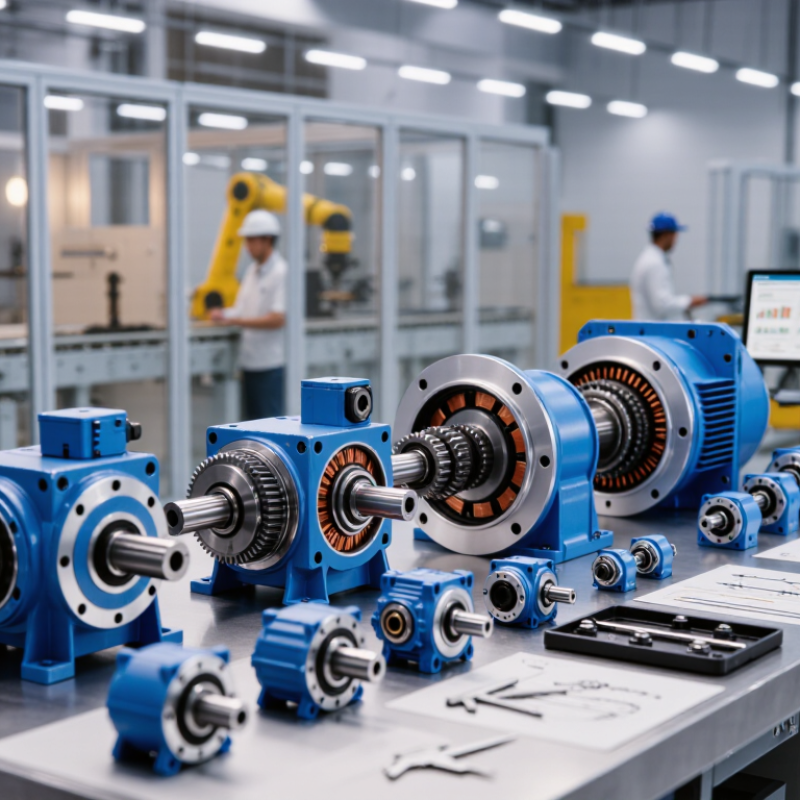
What makes a precision gear motor manufacturer in China stand out is not a polished catalog alone. Look for clear engineering data, including rated torque, gear ratio, speed range, backlash, and duty cycle. A capable supplier should explain how these values change under real operating loads. Ask for dimensional drawings and test records before approving a design. Details matter.
Tip: Share your actual operating conditions, not just the target speed. Include load changes, daily run time, mounting position, and ambient temperature. Then compare sample performance with the published specifications. A small mismatch can cause noise, heat, or early wear.
Manufacturing consistency is another key sign. Ask how gears are inspected, how motor and gearbox assemblies are tested, and whether production batches are traceable. Practical answers are more useful than broad claims. If possible, review a sample under your own application conditions and listen for unusual vibration. Also discuss lead times, spare parts, and technical support before placing an order. No supplier is perfect; unclear answers should prompt more questions. A reliable partnership grows through evidence, honest communication, and steady performance over time.
Use these criteria to compare manufacturers and verify claims against the specific motor, gearbox, and operating conditions. Figures below are typical evaluation targets, not universal specifications or rankings.
| Evaluation dimension | What to assess | Useful benchmark or evidence | What makes a manufacturer stand out |
|---|---|---|---|
| Backlash and repeatability | Specified backlash at the gearbox output and consistency between units. | Precision planetary products are commonly offered in low-backlash versions measured in arcminutes. Request the guaranteed value, test method, load condition, and inspection record for the selected model. | Publishes model-specific tolerances and can provide measured test data rather than an unqualified “zero backlash” claim. |
| Torque and duty performance | Rated output torque, permissible peak torque, service life, and duty cycle. | Compare continuous and intermittent ratings separately. Confirm the operating profile, ambient temperature, lubrication, and required life used for each rating. | Provides clear rating definitions and selection support based on the application's acceleration, load, and cycle time. |
| Transmission accuracy | Angular transmission error, lost motion, and torsional stiffness. | Ask for measurement definitions, test setup, and results for the exact gear ratio and frame size. Gear accuracy standards such as ISO 1328 may apply to gear elements; they do not alone specify complete gearbox performance. | Distinguishes gear-tooth accuracy from assembled gearbox accuracy and supplies relevant test documentation. |
| Efficiency and thermal behavior | Efficiency across the intended speed and load range, temperature rise, and heat dissipation. | Efficiency depends on gear type, ratio, lubrication, speed, and load. Request a test curve or stated test conditions instead of relying on a single headline figure. | Offers application-specific thermal guidance and explains any derating required for continuous operation. |
| Motor and drive compatibility | Motor type, voltage, encoder options, mounting interface, and drive requirements. | Check shaft and flange dimensions, connector pinout, encoder resolution, feedback type, and the drive's current and voltage limits against the application drawings. | Provides controlled interface drawings and supports integration testing with the customer's motor or servo drive. |
| Materials and manufacturing control | Gear materials, heat treatment, bearing selection, machining, and assembly controls. | Request material and heat-treatment specifications, critical dimension records, and traceability appropriate to the product and application. | Can explain how critical processes are controlled and how nonconforming parts are identified and handled. |
| Quality system and inspection | Quality management, incoming inspection, in-process checks, and final testing. | Verify any claimed ISO 9001 certification with its scope, issuing body, and validity. Ask which final tests are performed on each unit or production lot. | Supplies current, verifiable quality documentation and inspection reports tied to production batches. |
| Customization and engineering support | Ability to adapt ratios, shafts, flanges, seals, connectors, and motor configurations. | Confirm which changes are standard options and which require a new design, tooling, validation, or minimum order quantity. | Provides a documented design review, feasibility feedback, and revision-controlled drawings before production. |
| Lead time and continuity of supply | Sample availability, production lead time, capacity planning, and component availability. | Request current sample and repeat-order lead times, order assumptions, and a written plan for forecast changes or component substitutions. | Communicates schedule risks early and obtains approval before making specification changes. |
| Warranty and after-sales support | Warranty coverage, troubleshooting response, spare parts, and failure analysis. | Review written warranty terms, exclusions, service process, and the information required for a technical claim. | Offers practical engineering support and a documented method for investigating product failures. |
They inspect steel, bearings, and magnets against documented specifications. This can catch variation early.
Teams check dimensions, tooth profiles, and shaft runout with calibrated instruments. Small details matter.
Hardness tests after heat treatment help confirm gears suit their intended loads. The test conditions still deserve a close look.
Check current draw, temperature rise, and output torque. Results should reflect the motor’s stated operating range.
It links inspection records to production batches and helps explain how defects are handled. Paperwork alone is not proof.
They support factory robots, guided vehicles, conveyors, packaging machines, and CNC equipment. Compact spaces often make fit critical.
Review rated torque, backlash, noise, thermal limits, and duty cycle together. A higher reduction ratio is not always better.
Request test data under the actual load, not only no-load results. Check shaft alignment and mounting tolerances too.
Dusty warehouses may need better sealing and cable protection. Medical or clean equipment needs suitable surfaces and traceable records. I would verify both.
China’s precision gear motor industry stands out for its combination of engineering capability, flexible manufacturing, competitive pricing, and large-scale production. A reliable Precision Gear Motor manufacturer typically offers customized designs, stable torque performance, compact structures, low noise, and efficient operation for different equipment requirements. Common product types include planetary, spur, worm, helical, and other miniature or high-torque gear motors. Manufacturers support product quality through careful material selection, precision machining, automated assembly, performance testing, durability checks, and consistent quality control throughout production.
Precision gear motors made in China are widely used in robotics, automation equipment, medical devices, smart appliances, packaging machinery, office equipment, and other applications requiring accurate motion control. When selecting the best supplier, buyers should evaluate technical expertise, customization capabilities, production capacity, testing procedures, certifications, delivery reliability, communication, and after-sales support. A strong manufacturer should provide clear specifications, practical engineering solutions, stable product performance, and long-term cooperation value rather than focusing only on low prices.
